Understanding Genetic Therapies for Friedreich's Ataxia

FARA is proud to present our educational video on gene addition therapy for FA. This video covers the basics of gene addition therapy and unique aspects of gene addition therapy clinical trials. The information in this video is just one resource that can support individuals and families with FA as they make decisions about clinical trial participation.
Watch Now on Youtube
Screenshot 2025 10 20 at 4.22.35 PM scaled

How is genetic therapy different from traditional treatments?

What Makes Gene Therapy Unique: A Comparison to Small Molecules

FeatureSmall Molecule (Traditional Drugs)Genetic Therapies

Dosing

Repeated doses (daily or weekly)

One time dose

Permanency

Drug washes out of system

Non-reversible

Trial Timeline

A few days or weeks to several years

Several years

Combination

Likely can join another trial after washout period

May exclude you from participating in future clinical trials (of treatments that aren’t gene therapies) or from taking an approved genetic therapy

Why is FA a good candidate for genetic therapy?

Genetic Knowledge Supports Development of Genetic Therapy

Decades of research suggest that FA is a strong candidate for genetic therapy. The discovery of the FXN gene in 1996 provided a clear target. Symptoms of FA occur because mutations in FXN reduce the amount of frataxin protein made by the body. (Note that FXN is the gene, frataxin is the protein.)

One approach, called gene addition, delivers a working copy of FXN into cells to increase frataxin production. Another method, gene editing, removes the extra GAA repeats from the FXN gene, which may also boost frataxin levels.

Although different strategies are being explored, all genetic therapies for FA aim to increase frataxin by targeting the disease at the DNA level.

What are the different kinds of genetic therapies?

Two Types of Genetic Therapies: Gene Addition vs. Gene Editing

Gene Addition

Aims to deliver a healthy copy of FXN into cells to produce frataxin. The original genes remain, but the new copy can restore function.

Once inside the cell, the delivered gene needs to be turned on. This is controlled by a promoter—a piece of DNA that acts like an on/off switch to make sure the gene works in the right tissues and at the right levels.

Gene Editing

Aims to repair the person’s own FXN genes, often by removing the extra GAA repeats to help increase frataxin production. Gene editing tools, like CRISPR, are delivered to cells. These tools are designed to locate and modify specific DNA sequences.

All approaches aim to raise frataxin levels. Each approach will reach different tissues at varying levels, depending on the delivery vector and route of administration (which are explained below).

Gene Addition vs Gene Editing sqaure
How are genetic therapies administered to the body?

Routes of Administration

There are two main ways genetic therapies are administered: in vivo and ex vivo.

In vivo means the therapy is delivered directly into the body, where it travels to target cells.

Ex vivo means cells are first removed from the body, modified in a lab with the genetic therapy, and then returned to the patient.

Infused into the bloodstream, allowing the therapy to reach multiple organs, such as the heart. Many viral capsids cannot cross the blood-brain barrier, which limits access to the brain through IV delivery. However, there are FA programs that are developing new IV-delivered capsids designed to reach the CNS.

“Intraparenchymal” means within an organ. This method involves injecting the genetic therapy directly into the organ of interest. In FA, the cerebellum—particularly a region called the dentate nucleus, which is heavily affected by the disease—is a key target. This area is difficult to reach with therapies delivered through the bloodstream. The eyes are another potential intraparenchymal target. These procedures typically require surgery and anesthesia to deliver the therapy precisely.

Combines an IV infusion with a direct injection into a specific part of the body.

This approach helps the therapy reach multiple tissues, including both widespread organs and hard-to-reach areas like the brain, spinal cord, or eyes.

Ex vivo administration involves removing cells from the patient, modifying them with genetic therapy in a lab, and then returning the treated cells to the body.

How do genetic therapy delivery vehicles work?

Delivering Genetic Therapy to Cells

Scientists reprogram viruses to carry helpful genes into cells.

Viruses are naturally good at delivering genetic material into cells—that’s how infections work. Scientists have adapted this ability by creating viral vectors, which are modified to carry therapeutic genes instead of causing illness.

Each vector has a protein shell, or capsid, that delivers a gene or gene editing tools into cells and helps guide it to the right tissues, like the heart or brain. Vectors vary in how much genetic material they carry, which tissues they target, and whether they integrate into DNA.

Variants of the adeno-associated virus (AAV) is the most commonly used vector in FA. It doesn’t integrate into DNA and works well in non-dividing cells like neurons and heart cells. Other viruses can also be used as vectors.

While viral vectors are powerful, they have limits—like restricted tissue targeting and limited ability to be used more than once. To overcome this, researchers are exploring non-viral delivery methods, such as lipid nanoparticles and extracellular vesicles, which may offer more flexible, repeatable options.

Viral Vectors similar
Tissue Targeting

What tissues can a genetic therapy reach?

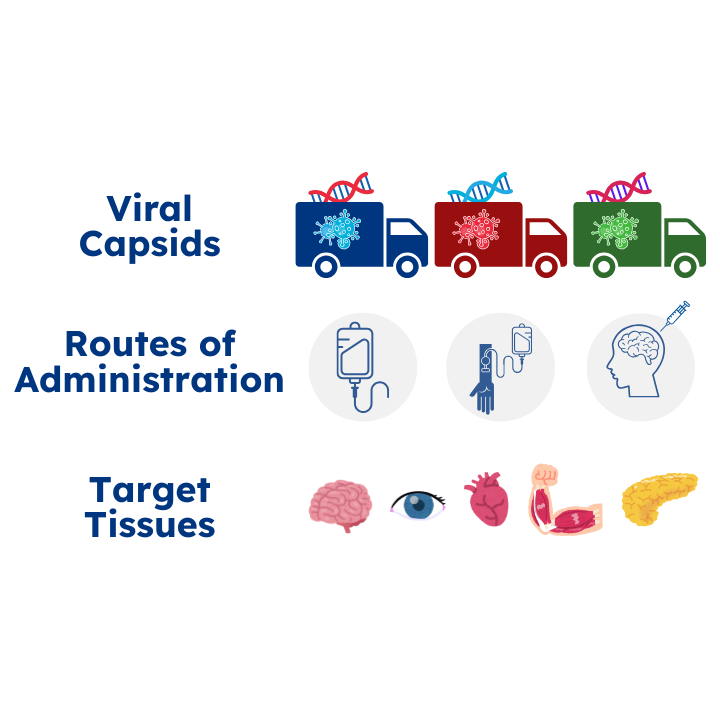
FA affects multiple tissues or organ systems including the heart, the muscles, the pancreas, the eyes, and the brain – specifically the cerebellum, the area of the brain that coordinates movement. In an ideal world, one genetic therapy would be able to reach all of these tissues at once, but this isn’t yet possible. It also currently is not possible to receive multiple doses of genetic therapy, so it’s important to understand what organ systems a specific genetic therapy will be able to successfully reach. 

The organs a genetic therapy can successfully reach depends on both the viral capsid (the vehicle that delivers the genetic therapy to cells) and the route of administration (the way the dose of genetic therapy is administered to the body).

Genetic Therapy Images 4
Tissue Targeting

The viral capsid’s role in tissue targeting

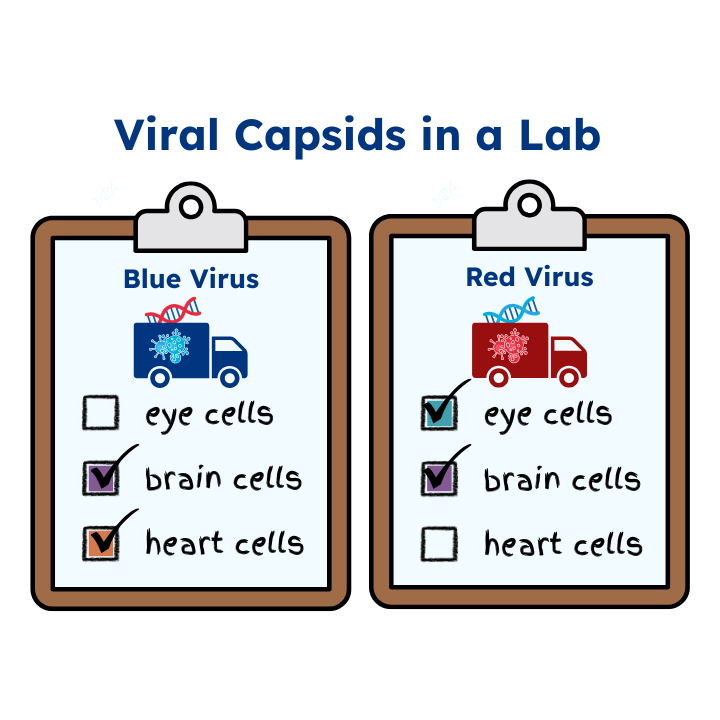
Researchers choose capsids based on whether they are able to deliver genetic therapy to cells in an organ of interest. Not all viruses are able to make deliveries to all types of cells. This comes from a natural trait of viruses to prefer to infect (deliver their genetic material to) specific tissues. A virus that causes the stomach bug is good at infecting the cells of the GI system, and a virus that causes the sniffles is good at infecting the cells of the respiratory system.

For FA, scientists may consider viral capsids that can deliver genetic therapy to the brain, spinal cord, heart, or eyes. Each specific AAV capsid will have a list of organs that it is able to deliver to. This list is based on whether the viral capsid is able to make the delivery to cells from each organ when those cells are grown in a dish in the lab.

Genetic Therapy Images 1 1
Tissue Targeting

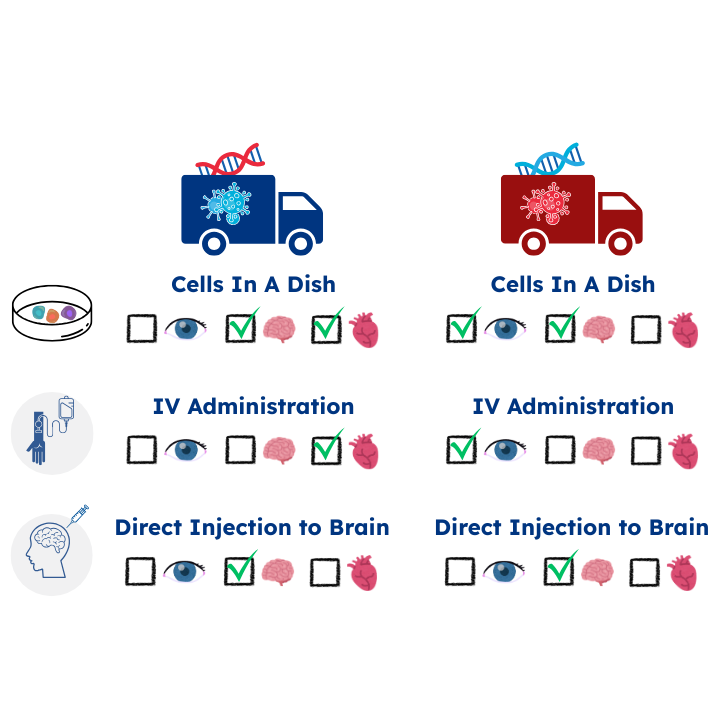
The route of administration’s role in tissue targeting

Once research reaches the clinical trial stage, the list of which organs a viral capsid can deliver to may become shorter. This is because the route of administration, the way a genetic therapy is administered to a body, also plays a role in which organs a genetic therapy can successfully reach. In the lab, the blue virus was able to deliver to brain cells sitting in a dish. In a body, things are different. If administered into the blood stream through an IV, the blue virus is not able to reach the brain – the distance is too long. A little bit of genetic therapy may reach the brain, but not enough to call it a successful delivery. But if the genetic therapy is injected directly into the brain, the journey is shortened, allowing the blue virus to deliver the genetic therapy.

Genetic Therapy Images 2 1
Tissue Targeting

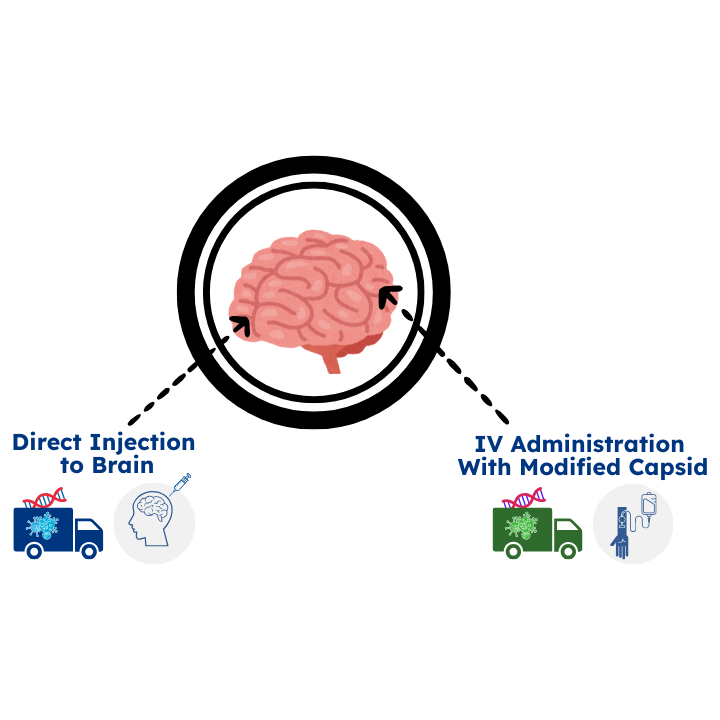
Reaching the Brain

The brain is an important organ in FA. Some genetic therapies may target a brain area called the dentate nucleus, a specific part of the cerebellum. The body has extra layers of protection for the brain to keep it safe from pathogens and other harmful substances. This can also make it difficult for genetic therapies and other types of drugs to successfully reach the brain. As in the above scenario, one way to address this is to inject a genetic therapy directly into the brain. A second way to address this is to use a viral capsid that has been modified to be able to make the long journey from an IV delivery to the brain. Research on both of these methods is still ongoing.

Genetic Therapy Images 3 1
Why can't I receive a 2nd gene therapy?

Dosing / Redosing Limitations

Immune Response

The immune system may recognize the viral capsid (delivery shell) as foreign, especially if someone has already been exposed to that virus in nature. This can:

  • Block someone from receiving the therapy

  • Prevent future dosing, even with similar viral subtypes

Participants are screened for preexisting antibodies, and research is ongoing into non-viral delivery systems and immune-modulating strategies to overcome this issue.

Because of immune memory, genetic therapy using viral vectors can typically be administered only once. Even changing to a different subtype within the same viral family may not avoid an immune response.

Other Technical Challenges

Off-Target Effect

Some gene editing approaches aim to correct the FXN gene. These methods carry the risk of off-target edits—accidental changes to the DNA in places that resemble the target sequence. These changes could potentially affect other genes and impact health. Preclinical studies help minimize this risk before testing in humans.

Dosing & Frataxin Toxicity

We know that people with only one working copy of the FXN gene (carriers) have about 50% of normal frataxin levels and do not show symptoms. This means full restoration may not be necessary. However, too much frataxin is toxic in animal models. Researchers are working to find the right “therapeutic window” to ensure the dose is effective but safe.

Manufacturing & Quality

The purity and consistency of genetic therapy products also affects safety and efficacy. Manufacturing is tightly regulated, but remains a complex part of development.

What are the key factors and considerations in gene therapy?

Understanding Safety and Efficacy

Genetic therapy for FA is a promising area of research, but none are currently approved.

Several are being tested in clinical trials to determine their safety, efficacy, and feasibility. These trials follow a structured development process, and the earlier a therapy is in this process, the less is known about how well it works or how safe it is.

Efficacy: What to Expect

Genetic therapies for FA aim to address the root cause—mutations in the FXN gene—but they are not expected to be a cure. Benefits may depend on when in the disease course the therapy is delivered. Earlier intervention may have a greater impact, but this is still being studied.

Safety: What We Know

Before a genetic therapy reaches human trials, it must pass preclinical testing in animal models and be reviewed by regulatory agencies like the FDA or EMA. Once in clinical trials, safety is closely monitored, often with years of follow-up.

Some potential safety concerns being studied include:

  • Immune responses to the viral vector used for delivery
  • Liver or dorsal root ganglion (DRG) toxicity, which have been observed in some other gene therapy trials in other diseases
  • Frataxin toxicity, from producing too much frataxin protein
What should I consider before joining a gene therapy trial?

Thinking Through Trial Participation for Genetic Therapies

Joining a genetic therapy clinical trial is a significant commitment.

Genetic therapies may have long lasting and permanent effects on the cells and organs they reach. Because of this some clinical trials may exclude anyone who has had a genetic therapy. Additionally, one genetic therapy might not be able to reach all organs impacted in FA. But, after receiving one genetic therapy you might not be able to receive other investigational or approved genetic therapies that use the same viral vector.

Anyone considering joining a genetic therapy clinical trial should spend time weighing the potential benefits and risks of trial participation, your goals of participating in a trial, and how the proposed trial schedule might impact your current life and routine.

Know your goals: What symptoms matter most to you? What are you hoping the therapy improves?

Understand the science: What tissues does the therapy target? Some therapies for FA are designed to deliver genes primarily to the heart, while others target both the heart and the central nervous system (CNS). Be sure you know which tissues are being addressed.

Talk to the team: Ask about safety data, potential risks, and what follow-up is required.

Use our informed consent worksheet to help guide these discussions.

Other FAQs about Genetic Therapies

Right now, the answer is no. Genetic therapies are delivered using viral vectors, and the immune system creates a memory of the virus used. If a second genetic therapy is delivered using the same or a similar virus, the immune system will recognize it and mount a strong immune response. This could destroy the therapy and potentially harm your health.

This applies even when two therapies use different viruses within the same family, such as different AAV subtypes. Although they’re distinct, all AAVs appear similar to the immune system, triggering the same response.

Encountering the virus through natural infection is very different from receiving it through genetic therapy. Genetic therapies require a large amount of virus, which can trigger a significant immune response. In contrast, natural infections typically involve a much smaller viral exposure, which your immune system can usually handle without added risk.

Individuals who receive a genetic therapy will shed the virus (e.g. via urine, cough, etc) for several weeks following administration of the therapy.  Although this type of exposure to the virus won’t make other people sick, it could cause others to develop antibodies to the virus. This could prevent them from receiving a genetic therapy that’s delivered by the same virus.

No, your immune system should recover from the immune suppressants given before a genetic therapy dose. However, like all medications, immune suppressants can cause side effects.

If you’re considering participating in a genetic therapy trial and have concerns, it’s best to discuss them with your doctor and the trial team before enrolling.

It depends on the type of genetic therapy.

  • Gene addition therapy using non-integrating viral vectors (like AAV) delivers a new copy of the FXN gene to the nucleus of your cells, but it stays separate from your DNA. It does not mix with your genetic material.

  • Gene addition using integrating vectors (like lentivirus) inserts the new gene into your DNA, combining it with your existing genetic code.

  • Gene editing directly alters your existing FXN genes, changing the DNA already in your cells’ nuclei.

No. Genes are passed on through egg and sperm cells, and genetic therapies are not designed to reach those cells. The therapy targets specific organs and tissues, so your reproductive cells—and your children’s DNA—remain unaffected.

No. Genetic therapy is considered long-lasting. Unlike small molecule drugs, it does not flush out of your system over time.

That’s still being studied. Genetic therapy is permanent in the sense that it stays in your body and does not wash out like a typical medication. But we’re still learning how long its effects last. The first genetic therapy for an inherited disease was approved in 2017, so long-term data is still emerging.

Probably not as a standalone treatment. FA affects multiple systems in the body, and one genetic therapy may not address all symptoms. It’s likely that a combination of therapies will be needed to treat the varied effects of the disease.