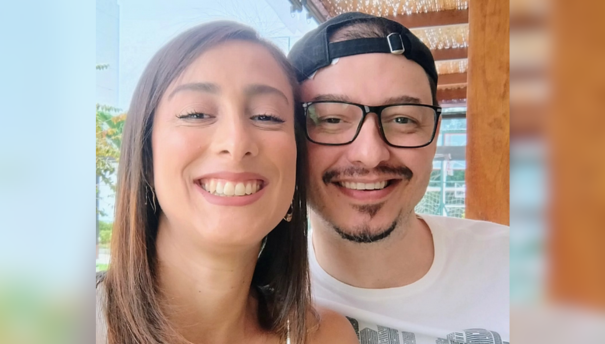
Name: I was born Antonio José Matos Moreira
Known as Tony Matos
To friends and family, just Tony
Age: 47 years old
Where do you live? Salvador – Bahia
Education (schooling): I have a degree in design / a postgraduate degree in Marketing.
Today, I am retired due to disability.
FA reminded me that I had difficulty speaking during my postgraduate studies. But contrary to my fear, they invited me to do a Master’s degree (they said I spoke clearly and with pauses) but I wanted to dedicate myself to my career.
One of the biggest defeats I suffered at FA was being retired due to disability and considered incapable of doing one of the things I enjoyed most – working with art and technology, helping people in their interactions.
I usually say to anyone who wants to listen: FA turns my body into a prison, but my mind only expands.
What is your relationship status? Do you have children? Married – second marriage
2 children – a boy from the first marriage who is 17 years old and still saw me walk, and a 7-year-old girl from the second marriage who was born seeing me in a wheelchair. Today, we live with my parents.
How long have you known you live with FA? I was diagnosed at 23 years old
Is there anyone with FA in your family? No, for my luck, I think I’m the trailblazer.
Describe your transition from walking alone to using a walker/wheelchair:
The first serious fall alone.
The pain never comes first: embarrassment comes first, the second time we realize that we no longer control our own body. A noisy silence takes over, as if the whole world had stopped to watch our fall.
Today I am 47 years old, and the falls have ceased to be accidents and have become an emotional calendar. But one remained in my memory: at 38, I fought against ataxia like someone pushing a wall, training to hold onto time and autonomy.
That day it rained, the street was glistening, and my shoes no longer had any safety. My body sensed the danger before my mind, and I was already tired long before I slipped.
The worst part wasn’t the impact, but the moment before: my brain sent a signal to correct, and my body ignored it. I tried to feign normalcy until the end, but when it decides to fall, the ground comes quickly and humiliatingly.
The sound of the bone hurt less than looking around and trying to pick up my dignity from the ground. The disease doesn’t just undo movements: it dismantles identity, piece by piece.
Then came the cast, pins, medication, and dependence—and the silent mourning of the independent person I thought I would be forever.
Then came the wheelchair and the walker, which I hated at first. I confused support with defeat, until I understood: adaptation is not surrender, it’s continuation.
Today I see them as a strategy, tools to continue participating in life. The worst part of the illness isn’t losing movement, it’s remaining lucid while your identity changes.
You remain you inside, but your body speaks a different language.
No one talks about the broken pride or the weariness of saying “everything is fine” when it’s not.
But there is lucidity in loss: I lost speed, I gained depth. I lost balance, I gained sight. Some find themselves in success; I, on the edge—a body that weakens, a mind that finally awakens.
What do you like to do to stay active and what kind of exercises work for you to stay strong? I maintain a routine that alternates physical training / speech therapy / reading / writing / studies (arts and homework with children) and technology.
Do you have any hobbies or special interests? Watercolor illustration, bonsai, games.
What is a good trick to make daily life easier? It’s not about acceptance, but rather understanding that your body often won’t behave as expected, but that deep down you’re trying to do your best.
When FA knocks you down, what do you think/do to feel better? Falling is normal for everyone, but the way I get up sets me apart from others; it’s to grow.
In bonsai, when we prune a branch, the goal is not to eliminate it, but rather for it to branch out and form a strong crown.
In what way has FA positively affected your life? Actually, it’s very complicated to say that a chronic disease affects you positively. But when you realize that you’ve slowed down, that you’re more prudent, less reactive, more analytical, reflective, and studious, you begin to value yourself.
What is your favorite motivational quote? I made sure to get it tattooed on my forearm: “Never forget who you are.”
What is the first thing you want to do when a cure/treatment for FA is found? Walk barefoot on the wet sand of the sea, feeling the breeze on my face.
“I have FA, but FA doesn’t have me.” What does this statement mean to you? How do you live your life in the face of adversity? Have you ever looked at the sky on a rainy day? It’s cold, it’s wet, it’s gray, but behind it all there is the Sun, bright and warm, I am the sun and the FA is just rain that passes, I remain.
Interview by:
Natache Iamaya Gomes
Edited by:
Brittany Sommerfield