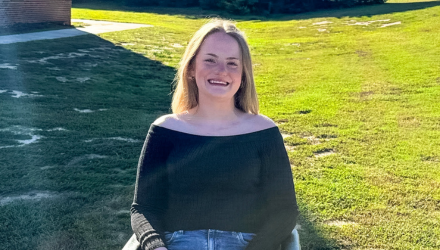
Name:
Brooke Temple
Age:
23
Where do you call home?
North Carolina
What is your education? What is a current goal you have as it relates to your career journey?
I graduated from North Carolina State University with a bachelor’s degree in psychology. Right now, one of my biggest goals is to figure out what career path is right for me and what I can realistically see myself doing long-term.
How does FA add to your future career?
Living with Friedreich’s ataxia has made thinking about my future a little more complicated. There are things I have to consider that other people might not, especially when it comes to accessibility, energy levels, and what kind of work environment would allow me to be successful. At the same time, I don’t want FA to make me feel like I have to limit my goals before I even know what I want to pursue.
My experience with FA has taught me resilience, patience, and how important it is to advocate for myself. Wherever my career takes me, I hope I can use those experiences to bring empathy and understanding to the work I do.
Who do you live with?
I live with my boyfriend, Bo.
What’s a typical day for you?
A typical day for me is pretty relaxed. I enjoy spending my time reading, playing video games, doing crafts, and spending time with my family. I’m happiest when I can take things at my own pace and make time for the people and activities I enjoy.
I’ve learned to appreciate the simple things that make me happy. Having these things in my life gives my days a sense of comfort, purpose, and something to look forward to.
How long have you known you are living with FA? When and how were you diagnosed?
I was 15 years old when I was diagnosed with Friedreich’s ataxia. My symptoms first became noticeable when I was 14. At the time, I played soccer, and my parents started noticing that I was leaning forward when I ran. I was also experiencing some loss of balance and coordination, which everyone initially assumed was just clumsiness.
After talking with my primary care doctor, I was referred to a neurologist. After evaluating my symptoms, she explained that I had a type of ataxia. Over the next several months, I went through different tests to rule out other types of ataxia. Eventually, I had genetic testing, which confirmed that I had Friedreich’s ataxia.
Being diagnosed at 15 meant that FA became a part of my life at a pretty young age, and I’ve now been living with the diagnosis for 8 years.
Are there any others with FA in your family?
Not that I know of!
Describe your transition from walking to a walker/wheelchair.
When I was 20, I started struggling much more with walking. At first, I really didn’t want to use any walking aids because I felt like it meant I was giving up. I was also becoming more isolated because I was embarrassed to ask for help or worried about needing assistance when I went places.
A physical therapist helped change my perspective. She told me that using walking aids wasn’t giving up; it could actually help me maintain my independence, conserve my energy, and allow me to start saying “yes” to outings again. That really stuck with me.
Once I started using a walker, I realized how much it could help. I had more freedom and didn’t have to spend all of my energy just trying to get around. It helped me understand that using a mobility aid was not something I needed to be ashamed of; it was a tool that could help me live my life.
When I was 22, I got my first manual wheelchair, and I have been using one ever since. My transition to using mobility aids was an adjustment, but ultimately, they have given me more independence and allowed me to participate in life in ways that I might otherwise have missed.
What do you like to do to stay active, and what type of exercises work for you to stay strong?
I enjoy doing Pilates, which focuses mostly on core exercises. Stretching also helps me stay flexible. I have worked with physical therapists who have given me exercises to help maintain my strength and prevent falls.
Do you have any hobbies or special interests?
I mentioned above that I love video games. Recently my favorites are: Minecraft, The Outlast Trials, and Halloween the Game.
What is a good trick to make daily life easier?
I’ve learned the importance of planning ahead. For example, instead of buying something that may be difficult for me to open or use, I try to find an easier or more accessible option. Another example is before going somewhere, I try to look at the entrances or accessibility. This helps me avoid unnecessary frustration and makes everyday tasks easier.
When FA gets you down, what do you think/do to feel better?
When FA gets me down, I like to talk about what I’m feeling with my boyfriend, my family, or friends who also have FA. It helps me to not keep everything bottled up, especially when I’m talking to someone who understands what I’m going through. I also find comfort in praying and meditating, and sometimes I just put on music and let myself relax and take my mind off things for a while.
What is one way living with FA has POSITIVELY affected your life?
FA has given me a better understanding of what other people may be going through. Living with FA has taught me not to judge someone based on what I see on the outside, because I know that everyone has their own challenges. It has also made me more compassionate and understanding toward others.
What is a favorite motivational quote of yours?
“Don’t let pride keep you from using something that can help you.”
What is a piece of advice that someone with FA has given you that encourages and inspires you?
When I was first diagnosed, a friend with FA told me, “If you don’t use it, you’ll lose it.” That advice has always stuck with me. It motivates me to keep moving.
What is the best advice YOU could give to a person who has been newly diagnosed with FA?
My advice would be not to be scared of what’s to come. When you’re first diagnosed, it can be easy to worry about the future and think about all the things that might change. Try to take things one day at a time and remember that your diagnosis does not define who you are. There will be challenges, but there will also be so many good moments, and you don’t have to face them alone.
What is the first thing you want to do when a cure/treatment to FA is found?
When a cure or treatment for FA is found, I want to walk up a flight of stairs without holding onto the rail. Maybe even in high heels! It’s something that might seem simple to other people, but for me, it would represent getting back a little bit of freedom that FA has taken away.
“I have FA, but FA doesn’t have me.” What does this statement mean to you?
To me, “I have FA, but FA doesn’t have me” means that FA is a part of my life, but it doesn’t define who I am. I have had to make changes and adapt to things because of FA, but I don’t want it to stop me from doing the things I enjoy or experiencing life. I am still me, and FA is only one part of my story.
How do you live your life in the face of adversity?
I try to take life one day at a time and focus on what I can do rather than what I can’t. When I face challenges, I try to find a way to adapt instead of letting them stop me. I remind myself that having FA doesn’t mean I can’t have a happy and fulfilling life. I lean on the people I love, stay active, and try to appreciate the good things in my life.
Tell us a little more about you….
I’m a pretty easygoing person who loves spending time with the people I care about. One of my favorite things to do is watch movies and series, especially dramas, thrillers, and documentaries. I love getting invested in a good story and having something to look forward to watching. There is so much more to who I am than my FA diagnosis.
Interviewed and Edited by
Noah Griffith