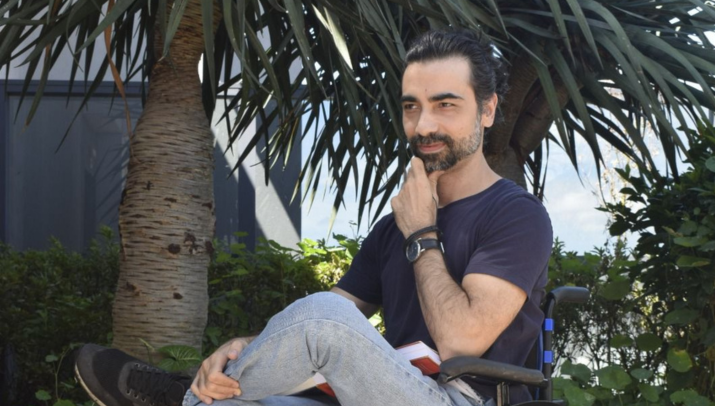
Name: Eduardo Tito
Age: 43
Where do you call home? Brazil is my home.
What is your education/career? I hold a degree in Mechanical Engineering and an MBA. These days, I create movie series with AI.
Who do you live with? I live alone in a place that is well adapted to my current capabilities. This wouldn’t have been possible a decade ago. What a time to be alive!
What’s a typical day for you? A typical day includes going to the gym, scriptwriting, movie generation, video editing, household chores, and reading.
How long have you known you are living with FA? When and how were you diagnosed? From ages 15 to 24, I saw many doctors who were unable to give me a correct diagnosis. When I finally consulted a doctor who knew about FA, I was around 24, and the diagnosis was confirmed through genetic testing. So, I have been diagnosed with FA for almost 20 years and have been living with noticeable symptoms for almost 30 years.
Are there any others with FA in your family? No, I’m the chosen one.
Describe an adaptation and/or transition you have had to take due to living with FA. I first started using a walking stick, not because I needed it to walk, but to signal that I have a disability and am not drunk. It worked. People would offer help more often instead of having weird reactions.
Five years later, I switched to a walker, which was much safer. Two years after that, I broke a leg and started using a wheelchair. I like it because I no longer have to go around looking at the ground. In the end, I realized I should have switched to a wheelchair sooner.
What do you like to do to stay active, and what type of exercises work for you to stay strong? To stay active, I do weightlifting and household chores, such as doing the dishes while standing up.
Do you have any hobbies or special interests? It might seem a little lame, but for me, it is the ultimate fun. I like to read classic fiction while listening to a matching soundtrack. Lately, I’ve been reading the original Conan pulp stories while listening to Basil Poledouris’s soundtrack.
What is a good trick to make daily life easier? Since energy tends to be limited, prioritizing and being comfortable saying no are a must.
FA life is hard and frustrating. It’s okay to get sad and depressed—just don’t stay in that mindset. When FA gets you down, what do you think or do to feel better? Weightlifting always lifts my mood.
What is one way living with FA has POSITIVELY affected your life? FA pushed me to become good at planning, prioritizing, and saying no.
“I have FA, but FA doesn’t have me.” What does this statement mean to you? I’ve come across more important things in my life than FA. In comparison, FA gets smaller.
Interview by:
Camila Primavesi and Natache Iamaya Gomes
Edited by:
Brittany Sommerfield