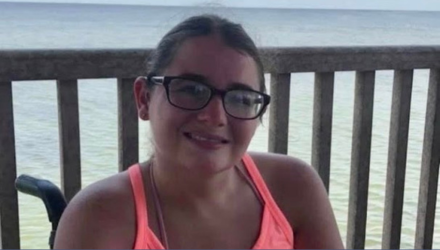
Name: Emily Rogez
Age: 30
Where do you call home? Purcell, Oklahoma.
Who do you live with? My mom and I live together. We recently built our house next door to my brother, which is nice. We get to see him and my nieces daily.
What is a typical day for you? After I get up and showered, my mom and I will sometimes go shopping. I listen to Audible books a lot, or we cook out with my brother.
How long have you known you are living with FA? When and how were you diagnosed? I was diagnosed when I was six years old. My teacher noticed my fine motor skills were poor and talked to my mom. They watched me for about six months, and when there was no improvement, we went to the doctor who did genetic testing. Around that time, my great aunt contacted us to tell us her two children had been diagnosed with FA, so the doctor knew to focus on the FA gene — and that is what came back.
Are there any others with FA in your family? I have two second cousins who had FA. Both have passed, though one passed in a car wreck, so it was not FA related.
Describe your transition from walking to a walker or wheelchair. I walked until I was 12, though I was falling a lot. I ended up falling on Easter Sunday and broke three bones in my foot. I have been in a wheelchair since then.
What do you like to do to stay active? I go to physical therapy and work on strength training.
Do you have any hobbies or special interests? I like to watch my niece cheerlead and play basketball. I also love shopping, listening to my books, and traveling with my mom.
What is a good trick to make daily life easier? Try to stay positive. Life is hard for everyone. Learn to laugh at yourself. FA life is hard and frustrating. It is okay to get sad and depressed — just do not stay in that mindset.
When FA gets you down, what do you think or do to feel better? I focus on what I can do instead of what I can’t. I look to the future — travel, treatments, and my family.
What is one way living with FA has positively affected your life? I have learned how strong I can be. I appreciate the little things and don’t take anything for granted. I have been able to travel and meet wonderful people I never would have met otherwise.
What is a favorite motivational quote of yours? “The flower that blooms in adversity is the most rare and beautiful of all.” — Mulan
I have it tattooed on my back. It symbolizes that strength, courage, and beauty can come through facing hardships.
What advice from someone with FA has inspired you? Someone once told me not to let FA win. It can take my body, but not my mind — and that is the best fight against FA.
What advice would you give someone newly diagnosed with FA? FA is not a death sentence. You can still live a full life. Join the FA community for understanding, resources, treatments, and support.
What is the first thing you want to do when a cure or treatment is found? The first thing I would do is thank God. If I can get out of the wheelchair, I want to dance!
“I have FA, but FA doesn’t have me.” What does this mean to you? I will not let FA win. It may have my body, but it will never take my mind. I will always fight until there is a cure.
How do you live your life in the face of adversity? Head on. There are sometimes tears, a lot of laughter, and as my mom always says when things are tough — we will figure it out. And we always do.
Tell us a little more about you. I am just me — a bit shy, living a quiet life. Something many people don’t know is that my mom and I send care packages to the military overseas with snacks and hygiene products. It helps us reset and focus on something beyond FA. I am also a proud member of the Ambassador Program.
Interview by
Bree Lessard
Edited by
Sam Dupre