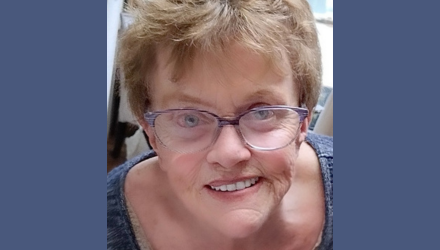
Name: Janice
Age: 69
Where do you call home? I call home a small university town in southeastern Wisconsin, about 100 miles from Chicago—a place that has grounded me while still keeping the wider world within reach.
Who do you live with? I live independently in a fully handicapped-equipped condominium, which I was able to secure after beginning Social Security Disability Insurance eight years ago. While I live alone, I am surrounded by a strong and reliable community. I have three brothers, six nephews, two nieces, caring neighbors, and close friends who can be at my side within minutes if I need help. Independence and connection coexist in my life.
What are some of your interests or hobbies? Curiosity has always guided me. I love creative pursuits, travel, reading, thrifting, and lifelong learning. I’ve explored more than 29 countries and nearly as many U.S. states, traveling by plane, ship, bus, car, and train. Though my travel looks different now, my spirit for exploration remains unchanged. I still enjoy local adventures and, when traveling internationally, I do so with trusted companions.
Books are my constant companions. Through the Wisconsin Consolidated Library Consortium, I listen to an average of 250 audiobooks each year. I don’t own a television—stories, ideas, and learning are my entertainment.
What is your education? I hold a master’s degree in education, specializing in K4–12 reading. My career focused on helping dyslexic children—students who learn differently—discover their strengths and unlock the joy of reading.
When were you first diagnosed with Friedreich’s ataxia (FA)? My diagnosis was a long journey. Symptoms began in 2007, but early genetic testing came back negative. After 15 years of uncertainty, a different genetic test in 2023 confirmed very late-onset Friedreich’s ataxia. Along the way, I learned that persistence matters—and that not all testing tells the full story.
What are some daily life hacks you use to make living with FA easier? Adaptation is my superpower. My home and routines evolve as my needs change. I use different walkers for different settings, balance poles, a walk-in shower, a bidet toilet, and main-floor laundry. Satin sheets, drinking straws, and thoughtful design choices make daily life smoother.
For mobility, I use a van with a rear ramp and several Pride scooters—one of which folds into suitcase size and fits through a standard cruise ship cabin door. Independence is often found in creative problem-solving.
What has living with FA taught you? FA has taught me gratitude for a life well lived—and a deep desire to give back. I would willingly participate in gene-splicing research if it could move science forward. My motivation comes from the younger people living with FA. I want them to have hope, options, and the chance to live rich, meaningful lives.
When FA gets you down, what makes you feel better? I allow myself to feel it. A good cry clears the weight and reminds me that emotional release is part of healing. Afterward, I rise lighter and stronger.
What advice would you give someone newly diagnosed with FA? Live boldly. Don’t wait. Don’t hide. Do what you can today, because today is guaranteed—tomorrow is not. Joy doesn’t disappear with a diagnosis; it simply asks to be found in new ways.
What are some challenges you face now that you didn’t in the past? One ongoing challenge is retaining my driver’s license. For the past three years, I’ve requested a road test to demonstrate that I am a safe and capable driver. My ability to walk does not define my ability to drive. Maintaining that independence is deeply important to me and remains a significant source of stress.
What is one way living with FA has positively changed your life? FA has stripped away speed and certainty, but it has gifted me humility. I’ve always been a planner, a dreamer, financially responsible, and hardworking. Now, I am also learning to accept help, to pause, and to recognize strength in vulnerability. Humility wasn’t a trait I sought—but it may be one of the most meaningful lessons FA has given me.
“I have FA, but FA doesn’t have me.” What does that mean to you? It means that while FA is part of my story, it is not the author. I choose engagement, curiosity, courage, and joy. FA may shape my path, but it will not shrink my life.
Favorite inspirational quote: “If it is to be, it’s up to me.”
Interview by
Michael Gambino
Edited by
Noah Griffin