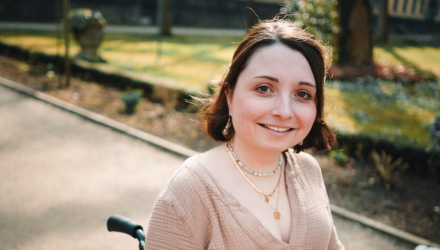
Tell us about yourself.
My name is Zoe Gräf, and I am 27 years old. I live in Würzburg, Germany, in an accessible apartment with my boyfriend and my grandmother.
I work as a social worker, providing consulting and support for people with disabilities or chronic illnesses, as well as their families and friends. My work focuses on participation, inclusion, and empowerment. I listen to people’s stories and challenges and strive to help them feel seen, heard, and valued. Ultimately, my goal is to foster a sense of belonging and community.
Outside of work, much of my time is spent attending medical appointments and various therapies. Despite those commitments, I remain passionate about traveling, exploring the world, and advocating for disability awareness and inclusion both online and offline.
What has changed since your last interview?
When I participated in my previous interview in 2020, I was still studying to become a social worker. I completed my studies and have been working in the profession since 2022.
At that time, I was an ambulatory wheelchair user and also used a walker. Ambulatory means that a person may use different mobility aids depending on the situation or stage of life. Since moving from my parents’ home into my own apartment in 2022, I have become a full-time wheelchair user.
During this journey, I began embracing and identifying myself as a disabled person. Through connecting with other people with disabilities, I gained new perspectives on disability and developed a strong sense of community and disabled joy. Those experiences helped me feel connected, empowered, and proud of who I am.
When did you start your activism?
Over the past two years, I have become increasingly open about my diagnosis and disability. As I have grown more comfortable sharing my experiences, my activism has naturally grown alongside me.
What inspired you to become involved in disability advocacy?
Living with a rare condition like Friedreich’s ataxia (FA), or any rare disease, can often feel lonely and isolating. Many people feel pressure to hide what makes them different. That was certainly true for me when I received my diagnosis as a teenager and was trying to navigate all the challenges that come with adolescence.
As I got older and began working with people who live with a variety of chronic illnesses and disabilities, I realized I was not alone. Building friendships with other people living with FA and many wheelchair users gave me a sense of community and belonging. For the first time, I felt seen and accepted exactly as I am.
Those experiences encouraged me to share more of my life online through Instagram and podcasts. I also became involved in local advocacy efforts, working offline to promote disability rights and accessibility within my community.
How does FA impact your advocacy work?
In many ways, FA is the driving force behind everything I do. At the same time, some of its symptoms can make advocacy challenging.
One of the symptoms I experience is chronic fatigue. This is much more than simply feeling tired. It can feel like complete physical and mental exhaustion. During periods of fatigue, I may struggle to speak, move, or participate in activities, and often need to rest for several hours. Because these episodes can occur unexpectedly, I have to carefully manage my time and energy.
However, I would not say that FA or my wheelchair are the primary limitations in my life. The biggest barriers are often inaccessible environments and societal attitudes toward disability. Those are the challenges I hope to change through advocacy.
Is there anything else you would like to share?
To anyone who is newly diagnosed, and to their family members and friends, my biggest advice is to communicate.
Talk with one another and seek connection instead of withdrawing. Stay active whenever possible and adapt activities to meet your needs. Pay attention to both your physical and mental health and remember to keep living your life.
Most importantly, if your diagnosis does not require major changes right away, remember that you are still the same person you were before. Don’t let FA define you or take away your joy.
Interview By
Edited By
Disclaimer: Please note that this post represents an individual’s experience and is not medical advice. Please consult with your doctor about the safest and best way to manage your FA diagnosis.