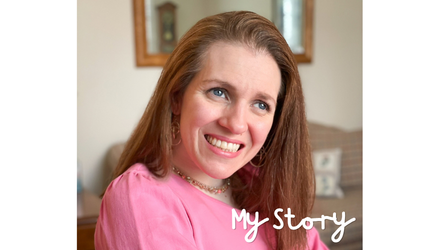
My childhood was spent growing up in New England towns filled with supportive friends and family. I was involved in many typical childhood activities such as skiing, softball, and gymnastics. I also participated in dance, girl scouts, drama class, and took piano lessons. I would go to the mall, the movies, and partake in recreational activities such as going on walks/bike riding, swimming, climbing, and many types of arts & crafts. Vacations with my family were spent going to fun destinations across the US, enjoying the beach, mountains, and Disney World. I absolutely loved school, especially reading, writing, art, and doing projects.
Childhood
Diagnosis
On my tenth birthday I broke my arm after my party and went to my first day of middle school in a cast. I had barely recovered when I broke it again on a ski slope before Christmas, and my parents started to worry about my health. After the second cast was removed, my family noticed my walking seemed awkward, and decided I needed an evaluation. My pediatrician was concerned enough to send me to a neurologist, who took a lot of blood for testing, which actually caused me to faint! I had a comprehensive walking and gait evaluation, imaging tests, and even went to the Shriners Hospital for children.
I found out I had scoliosis, but it took a full year from my birthday party to determine a diagnosis of Friedreich’s ataxia. Friedreich’s ataxia (FA) is a genetic, progressive, neuromuscular disease that causes loss of balance and coordination, muscle weakness, and fatigue. Additional health issues may include cardiomyopathy, scoliosis, diabetes, vision loss, and hearing impairment. The Friedreich’s Ataxia Research Alliance (FARA) describes FA as life-shortening and affecting an estimated 5,000 individuals in the United States and 15,000 worldwide.
In 1998, there was very little positive information about Friedreich’s ataxia, so my parents just told me I had a “balance problem.” It was still in the very early stages, so there was not much of a change to my life. My neurologist in Springfield, Massachusetts recommended a doctor in Montreal, Canada, who had discovered the gene causing Friedreich’s ataxia just about a year earlier. Dr. Massimo Pandolfo was a caring person and explained my FA symptoms, which included a loss of balance, called ataxia.
A year post diagnosis, my family met with Dr. Pierre Rustin at Children’s Hospital in Paris. He was researching cures for Friedreich’s ataxia, and with his assistance, I started on an antioxidant therapy developed in Europe. I did not let FA affect me, nor did I discontinue any of my daily activities or hobbies, for as long as I could. My friends and family adapted and adjusted as well, so I could remain involved in normal life activities.
Deciding to be an Advocate
As my balance issues progressed, my official diagnosis was revealed to me as Friedreich’s ataxia. I was worried. I learned that people with FA have a wide range of symptoms, and I didn’t know what would develop or when or how badly these changes would affect me. Meanwhile, I learned to cope with several new symptoms, like difficulty walking and coordinating muscle movements. I remember being very apprehensive about my ability to do physical things that I enjoyed such as riding my bike, dancing, going to amusement parks, or playing the piano. More than anything, I was concerned that people would observe my physical disability and make negative judgements about my intellectual capabilities.
Having FA caused me to really focus on normal things such as school, friends, family, babysitting jobs, after-school activities and traveling. I committed to continue doing the activities I loved for as long as I could. I did have to fight misconceptions about my intelligence, though more with the school administration than my true friends.
I decided I wanted to make a difference in my life and in the lives of others. I chose a course of fundraising and spreading awareness about Friedreich’s ataxia and Muscular Dystrophy. I found that my true friends wholly supported me with these activities.
MDA Goodwill Ambassador
When I was fourteen I learned what my diagnosis was and more about this a rare progressive illness. Immediately, I was determined to make a difference, starting with informing others about my neuromuscular disease. I soon discovered that my involvement and advocating about Friedreich’s ataxia was a mission that I enjoyed. FA is one of the illnesses that is under the umbrella of diseases covered by the Muscular Dystrophy Association (MDA).
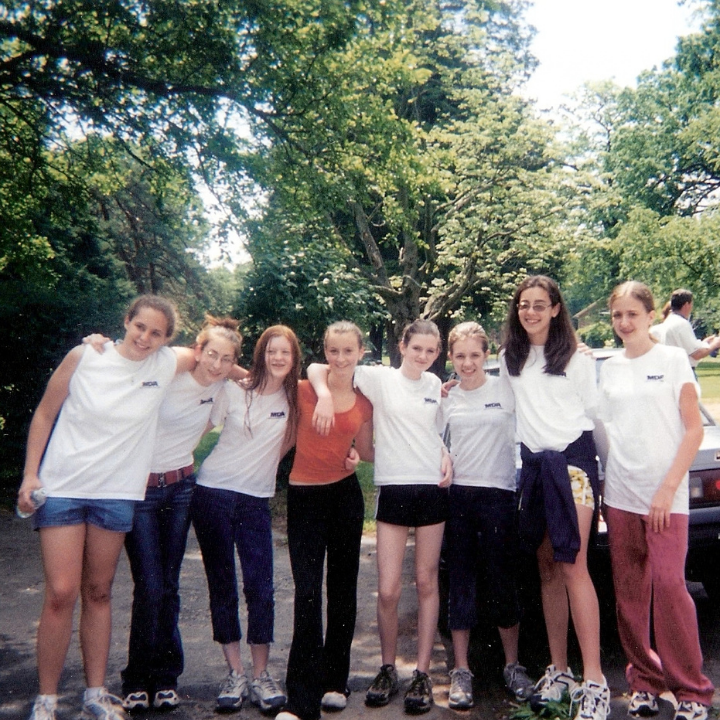
In 2002, I became a “Good-Will Ambassador” for the MDA in Western Massachusetts. I attended fundraising events, speaking to audiences about the MDA, their programs, and how I was impacted. That summer my parents helped me to put together “TEAM LAURA” to participate in the MDA Walk in Springfield, Massachusetts, to fundraise and advocate for the organization. After struggling with my first major cardiac event that autumn, which resulted in my need for using a wheelchair part-time, I became even more committed to finding a treatment, and ultimately, a cure for FA.
Pictured: MDA Great Walk, June 2002
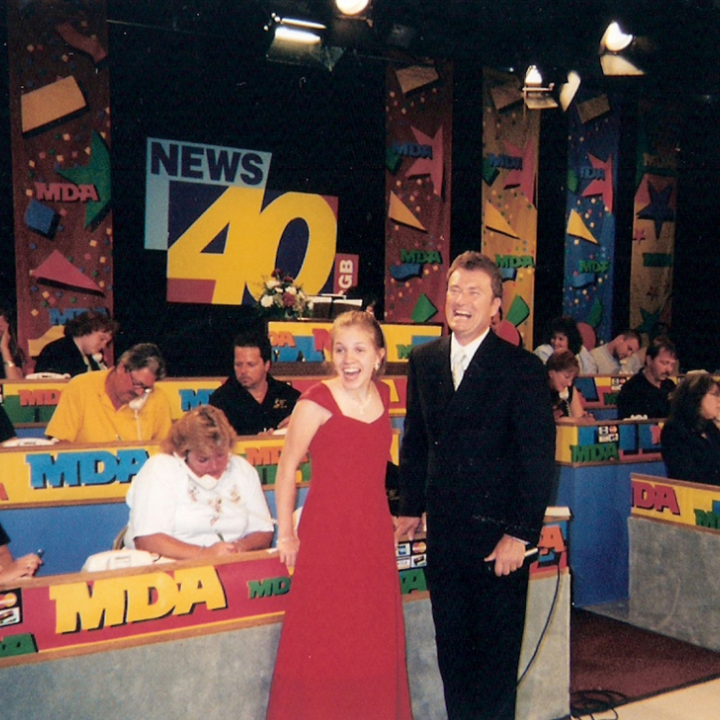
A local newscaster, Lisa Daniels, came to my house and video recorded my story which was broadcast during the MDA Telethon, an event she co-hosted locally over Labor Day weekend. I also used the video at my school to explain to teachers and students how Friedreich’s ataxia was affecting me. The next year, after Lisa had left for a position in New York City, I was asked to co-host the Telethon with long-time local broadcaster Dave Madsen. A local seamstress designed and made a custom dress for me to wear for the opening night of the telethon, where I retold my story and how the MDA supported me. My friends and family came to watch the show and cheer me on, and enjoyed spending time with me in between sets. I also spoke to a large audience at the Basketball Hall of Fame in Springfield, MA, about the MDA and FA.
After I moved to Georgia, I participated in the MDA Telethon held in Atlanta. TEAM LAURA continued fundraising, joining the MDA “Walk of Hope” held at ZOO Atlanta and later the Braves Stadium. In over nine years, TEAM LAURA raised over $100,000 for the MDA.
Pictured: MDA Telethon with Dave Madsen, September 2003
Balance of Feathers
My advocacy work continued during my sophomore year of high school in 2002. I co-wrote a play called “Balance of Feathers” with my instructor at The Drama Studio in Springfield, MA. The play discussed issues about being diagnosed with Friedreich’s ataxia and how it impacted all aspects of life. Several Greek mythology stories, combined with my own modern day story, became an analogy about my diagnosis and how it affects my friends, family, and all those around me. I played the lead role when the play was presented to the drama studio families at their annual year-end show.
NAF
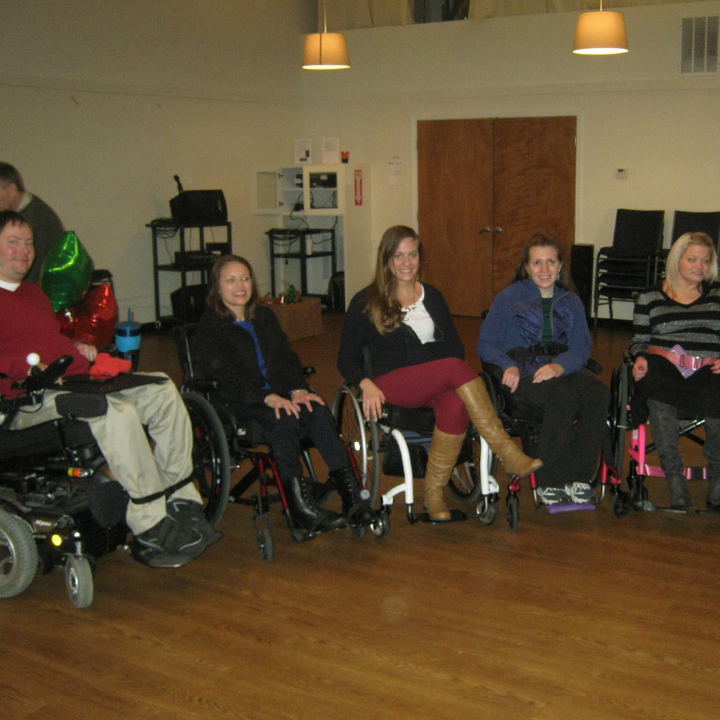
I have participated in National Ataxia Foundation (NAF) events locally and across the country and shared information about my diagnosis, disease progression, and techniques to maintain quality of life and ataxia in general with this progressive neuromuscular disease. At a NAF meeting in early 2004 I contributed, along with other girls, to a video that demonstrated the movements and speech of someone with Friedreich’s ataxia. The video was then delivered to an actress playing a part in a movie living with a Friedreich’s ataxia diagnosis.
Pictured: NAF Christmas Party, December 2016
Make-A-Wish
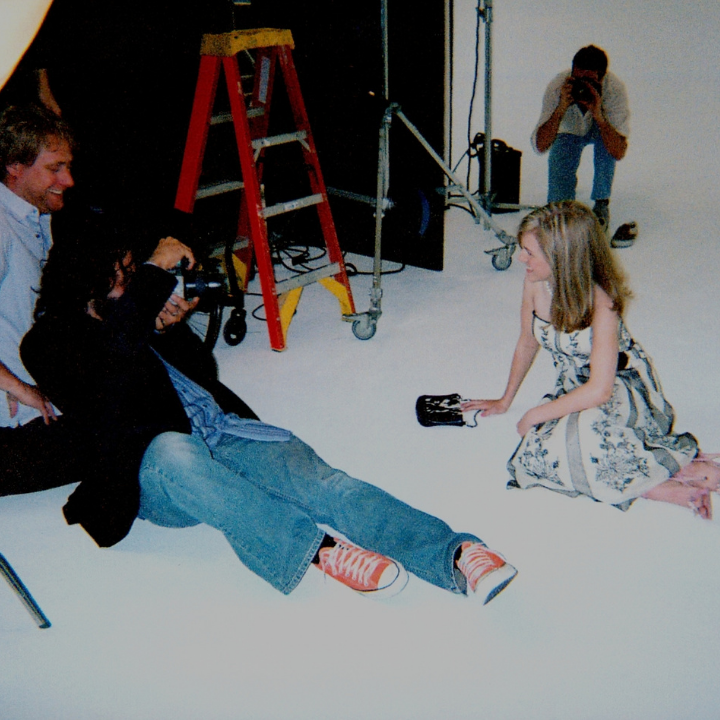
Before I moved to Georgia in 2004, and because I had a rare, incurable disease, I was sponsored by Make-A-Wish International to come to New York City for a full week. My wish to be a model for the day was organized by fashion expert and philanthropist Mary Alice Stephenson. Several other girls my age were brought to Chelsea Piers and attended to by recognized beauty professionals for individual photoshoots by Judson Baker, a famous fashion photographer. I was accompanied by my parents and my best friend Jaime, not only at the photoshoot, but while sightseeing around the city. Mary Alice created an amazing experience, bringing together people and organizations that donated their time or clothing and jewelry to give us memories to last a lifetime.
Pictured: Make-A-Wish Modeling, April 2004
High School
Soon after Make-A-Wish my family moved to the Atlanta area. Although I could still walk (with help) my parents built an accessible home, as we did not know how rapidly my disease would progress. I attended Mount Paran Christian School my senior year, as it was newly built the prior year with accessibility in mind. Mt. Paran was a very inclusive, insuring that I could participate in all off-campus activities via an accessible van, including trips to Atlanta museums, a Christian retreat in Alabama, and even a trip to Disney World in Florida. This was a huge improvement to my high school in Massachusetts, as I started using a wheelchair part-time my junior year. I had to enter that school via a narrow loading dock ramp for the cafeteria and use a freight elevator to get to my 2nd floor classes! My Mt. Paran graduating class was small (only 28 students!), including Danielle, one of my best friends.
Girl Scouts & Service Dog Gold Award
I joined girl scouts in Kindergarten in Connecticut, and my mom led our troop when we moved to Massachusetts through my junior year of high school. After we moved to Georgia, I continued on my own with my Mom’s guidance and finally achieved my Gold Award in 2005. This is the highest level award in Girl Scouts.
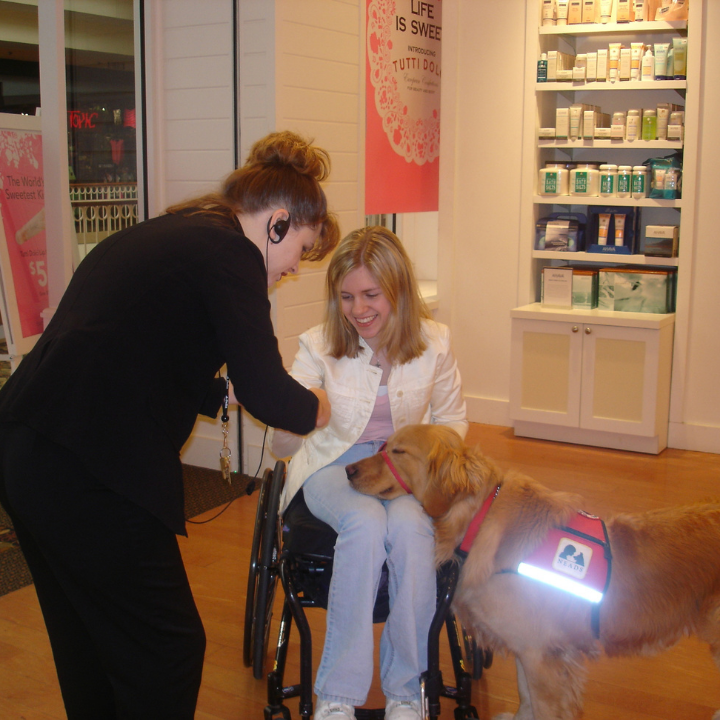
I received a service dog from the National Education for Assistance Dog Services (NEADS), a handsome golden retriever named Munroe. While being very helpful, there are many unforeseen obstacles to having a service dog in public. Old and inadequate building infrastructure and sometimes uninformed business owners or public administrators do not understand the protections under ADA law. However, in addition to providing physical support and “protecting” me, Munroe also provided me with emotional support, as he made me more approachable and I was always glad to tell people I met what he did for me.
Pictured: Shopping with my service dog Munroe, April 2003
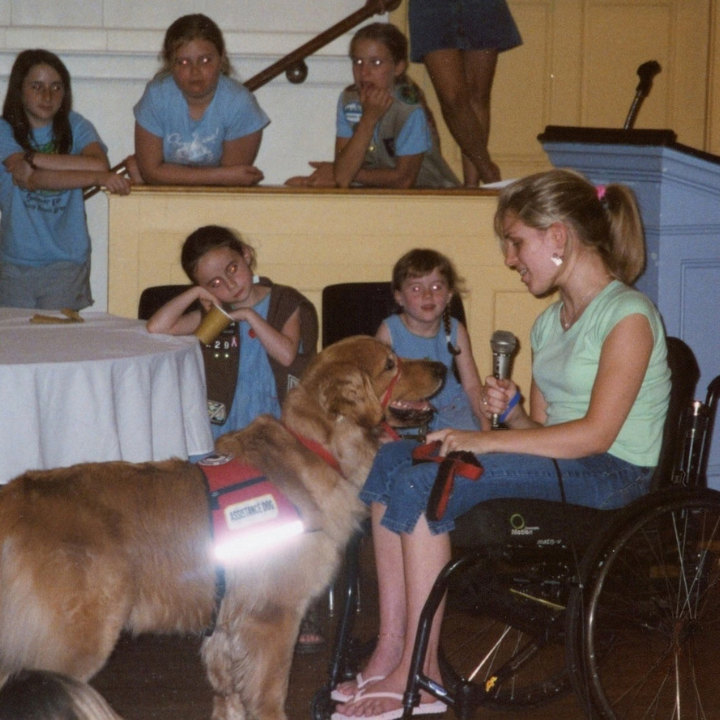
As a natural extension of my advocacy for the disabled, I prepared two presentations about service dogs as part of my Girl Scout Gold Award requirements. In one presentation, I covered what service dogs do, and why they are needed. The second presentation focused on Munroe, showing examples of his helpfulness.
I made presentations to local troops in Massachusetts at a church hall, at Mt. Paran High School, and at a Girl Scout event in Georgia. Munroe participated of course, as he went to high school and college and traveled to NAF, MDA, and FARA events alongside me. He was very protective, able to understand my non-verbal cues, and always stepped in when needed. Munroe was also a great conversation starter, allowing people to be more comfortable approaching a disabled person and provide me a chance to advocate for the MDA and FARA
Pictured: Girl Scout Service Dog Presentation, June 2005
Berry College
I received a scholarship to attend Berry College on their beautiful campus in Rome, GA. Munroe went to college with me and helped me to meet people. Rather than seeing a disabled person people were sociable and drawn to me because of Munroe. My idea was to become a teacher, and I student-taught several grades. I enjoyed my classes, made many life-long friends, and overall had a wonderful college experience. My interests quickly grew to study psychology, family studies and art, and I graduated with this interdisciplinary major.
Pictured: Student Teaching at Berry College, February 2009
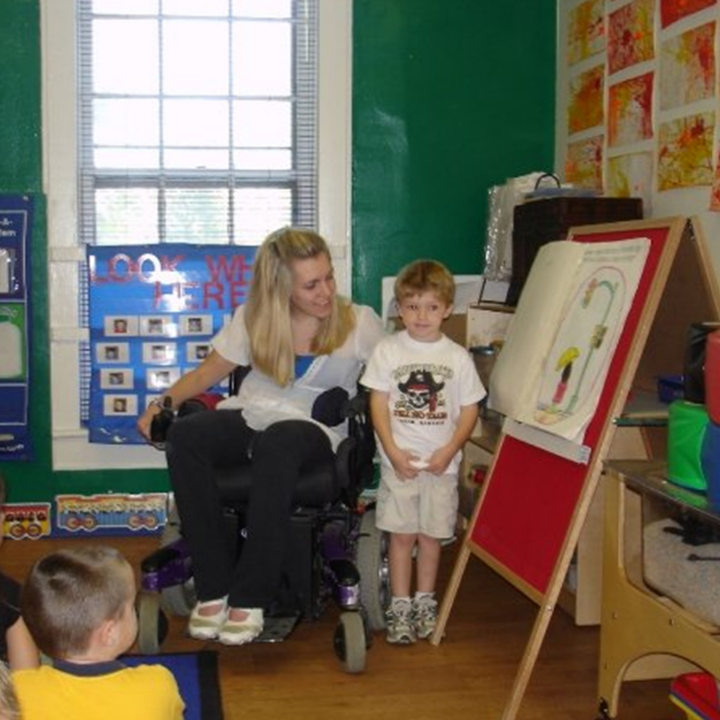
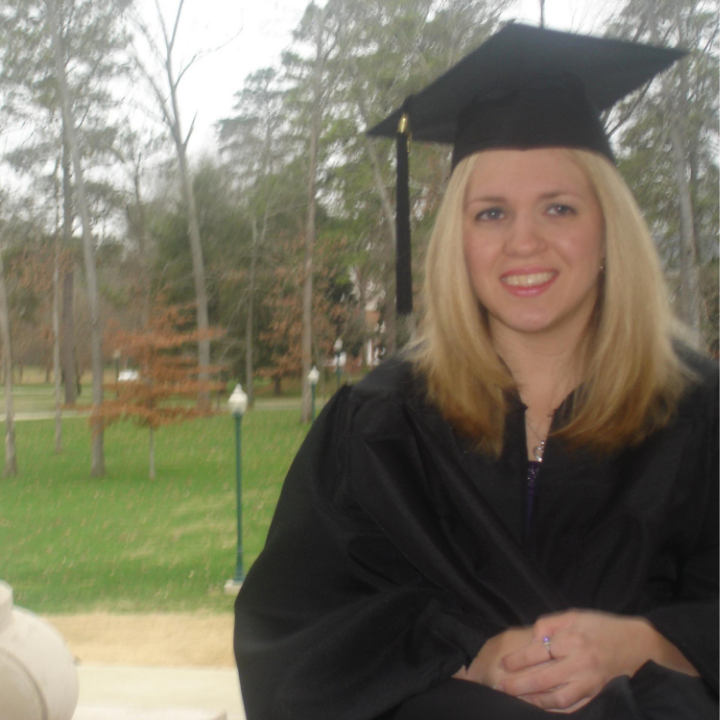
However, my Friedrich’s ataxia continued to progress; I lost more movement, became more fatigued, and began to notice my speech being affected. Close to my college graduation, my eyesight rapidly began to fail (optic nerve degeneration). Rather than simply becoming a teacher, which would be difficult to do with my speech difficulties and vision loss, I believed my interdisciplinary study better covered my interests. So I decided to stay focused on fundraising and awareness for my disease and other types of muscular dystrophy.
Pictured: Berry College Graduation, December 2009
Life After College
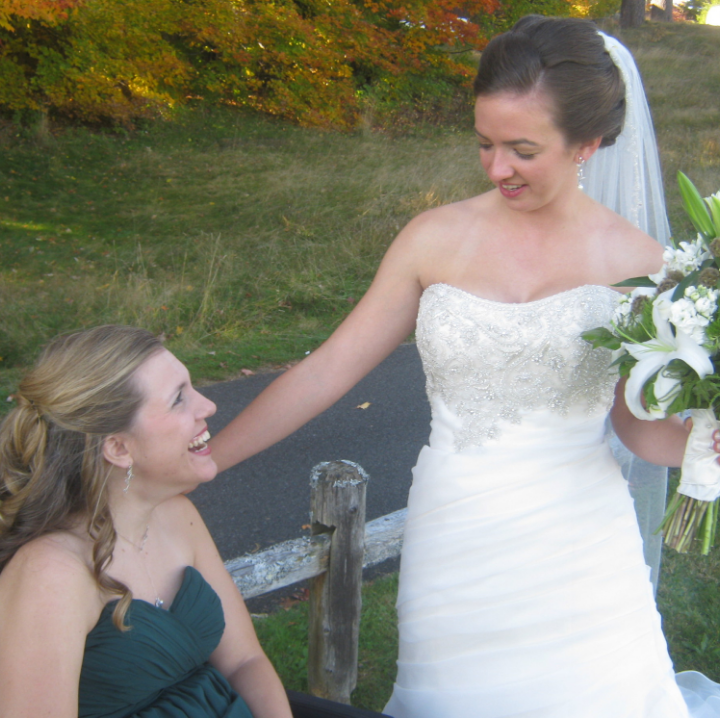
After graduating from Berry College, I knew that I would not be able to have a working career because of the progression of my disease. This was very frustrating, but I decided to concentrate on things that I could do. Traveling with a neuromuscular disease presents many challenges, like finding wheelchair accessible bathrooms or larger fitting rooms at clothing stores. Yet, my friends and I would still hang out—go shopping, out to lunch or dinner, or spend time at one another’s houses. I attended the weddings of my friends, both from childhood and college, and was honored to be a bridesmaid for some of them. And when these friends had children, I put a lot effort into making their children a part of my life as well.
I continue to enjoy visiting with family and friends, both here in Georgia and traveling to the northeast to see them. Finally, I am always committed to being involved with fundraising and spreading awareness about both Muscular Dystrophy and Friedreich’s ataxia.
Pictured: Bridesmaid at Alyssa’s Wedding, September 2014
Angels for MDA
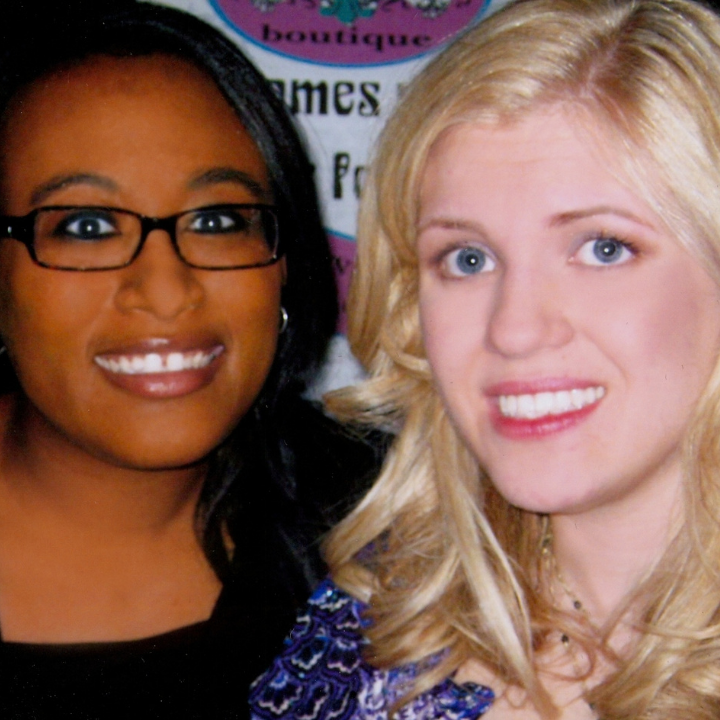
In the summer of 2010, I helped to develop, plan, and organize a fashion & hair show fundraiser with an Atlanta based salon and a clothing boutique. We called it “Angels for MDA”, and though on a smaller scale, Mary Alice Stephenson was my inspiration. This fundraiser was created with the support of the MDA. Several thousand dollars in donations were targeted to support both the MDA and FARA. I modeled a dress and new hair style, alongside other friends of mine that I recruited that had FA and other forms of muscular dystrophy.
Pictured: Hair and Fashion Show with Danielle, May 2010
FARA and rideATAXIA
A wonderful organization was established by parents of children with Friedreich’s ataxia in 1998. The Fridreich’s Ataxia Research Alliance (FARA) worked directly with the MDA and NAF and played a critical role in my life as my FA progressed. One of the most important FARA events is the rideATAXIA series, an annual, multi-city, multi-route cycling fundraiser supporting the mission of advancing research to treat and cure Friedreich’s ataxia. Outback Steakhouse has been a sponsor of rideATAXIA since the beginning, and provides meals for all attendees.
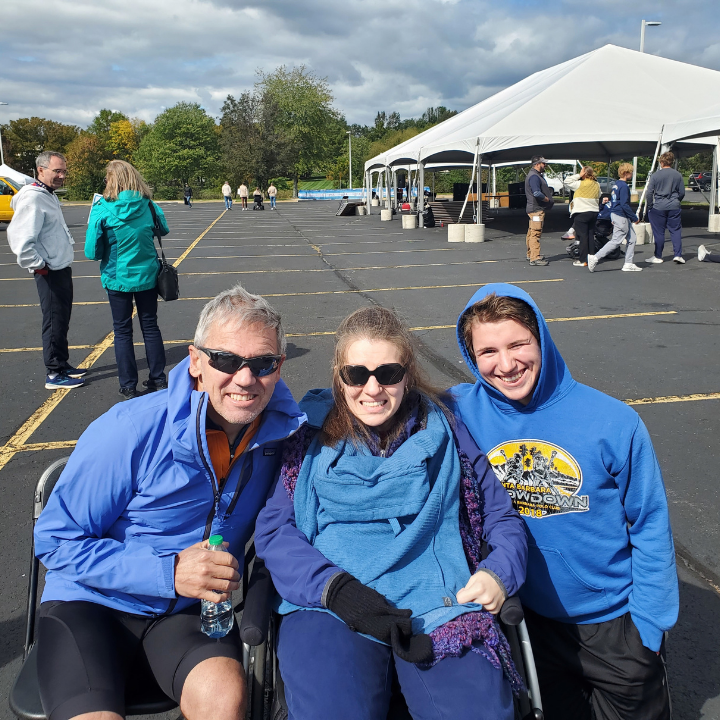
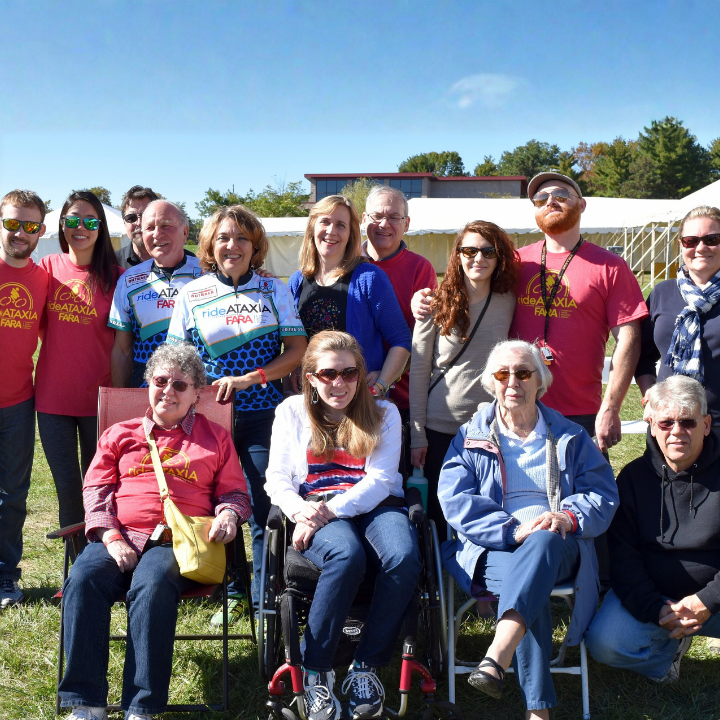
Pictured: rideATAXIA Family Photo, October 2015
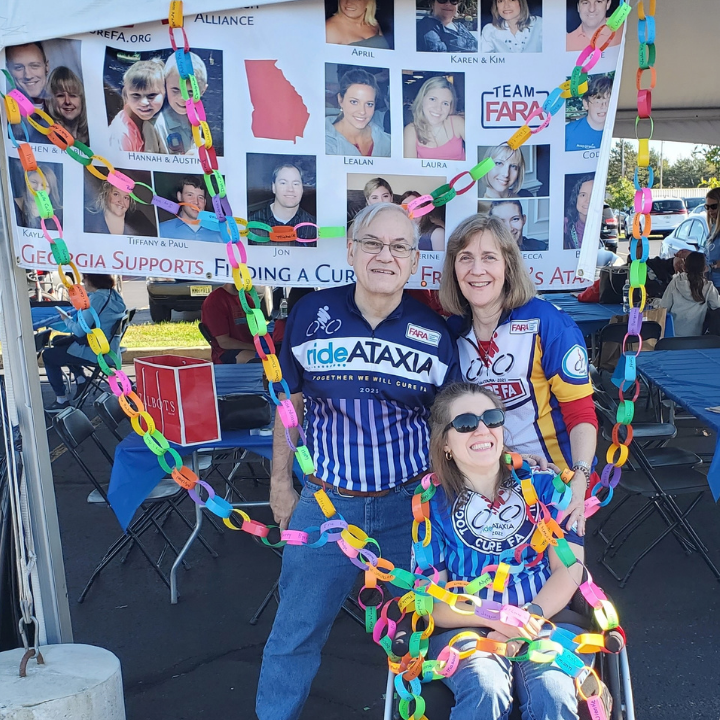
rideATAXIA was founded by a young man, Kyle Bryant, who has FA. TEAM LAURA has participated in the event over the last 16 years, and our supporters have raised over $500,000 for FARA. Last year, 45 fundraisers joined TEAM LAURA, and we raised almost $41,000. In 2024, FARA sent out blank paper strips of construction paper for us to record everyone who donated to TEAM LAURA. On the day of the event, we had a paper chain over 200 links long.
Pictured: rideATAXIA Donor Chain, October 2024
TEAM LAURA consistently raises over $25,000 each year, even during the COVID crisis, and in total between the MDA Walks and FARA rides we hope to surpass $650,000 in cumulative donations this year. My friend Jaime helps me create a thank you card depicting the event day and we send one out every year to each contributor to express our appreciation for their support
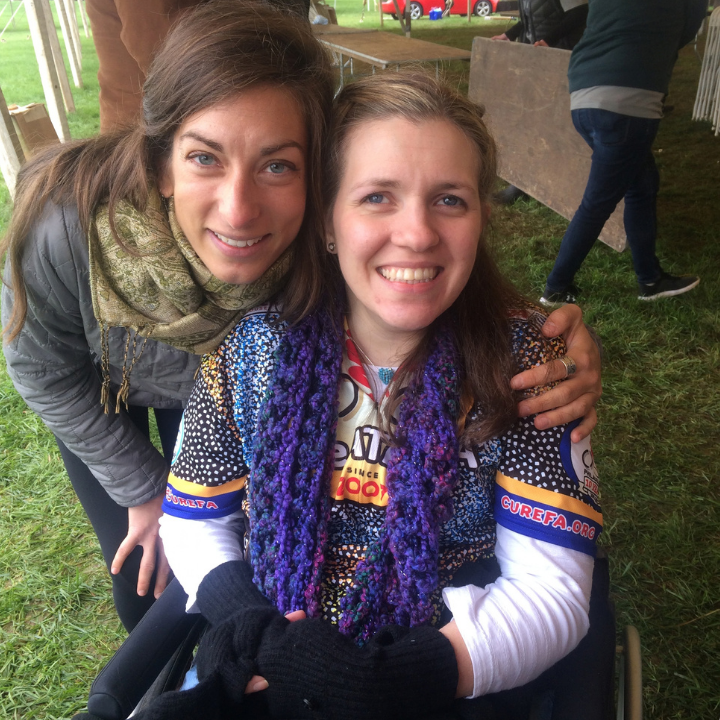
Pictured: rideATAXIA with friend Jaime, October 2018
Clinical Studies
Besides fundraising for my neuromuscular disease, I’ve been involved for many years in clinical studies at Children’s Hospital of Philadelphia (CHOP) to advance research to treat and cure for Friedreich’s ataxia. Dr. David Lynch, the director of the Friedreich’s Ataxia Center of Excellence at CHOP, is also my neurologist. Like many patients with FA, I take part in yearly a natural history study, and this was critical for the first FDA approval of pharmaceutical – Skyclarys – to treat FA in 2023. I also support clinical testing of another potential drug, Vatiquinone PTC-743, that treats certain symptoms of FA. Further, I have participated in research investigations at other institutions, and my parents and other family members have also volunteered for research studies.
Living with FA
I turned 39 this year. Problems with my communication, mobility, and fatigue impact my ability to participate in social events with my friends and family. Having Optic Nerve Degeneration is very difficult because I cannot enjoy books, videos, or even see people’s faces and expressions. It is not outwardly obvious to people that I am basically blind, and combined with my hearing and speaking difficulties often leads new acquaintances to treat me differently, and make negative assumptions about my intellectual capability. My cardiomyopathy is less severe than for most people with FA, due in part to the medication I take and leading a healthy lifestyle. However, my heart is still very sensitive to certain medications, dehydration, caffeine, and illness. Generally my FA symptoms (vision, speech, hearing, fatigue and body temperature control issues) tend to fluctuate depending on these and other factors such as light intensity or background noise.
Keeping up with my family and friendships is very important to me. I have close friends from early childhood, my years in school, and people I have met since graduating, including some special care-givers.
Pictured: rideATAXIA with Friends, October 2019
It saddens me that so many of my friends diagnosed with neuromuscular illnesses such as Friedreich’s ataxia have passed away. It has been an on-going challenge to figure out who I could ask for help and my friends and family have always been there for me. For example, when my balance became more severe, I needed someone to hold on to my arm while walking at school or in other public places like the mall, and now I need help transferring and with my wheelchair. I appreciate my parents so much for the way they brought me up from childhood, and today for wanting me to live with them so that they will always be involved in my physical care. I have hired caregivers, but my parents are here for me daily. I want so much to be able to do things for my parents but I am stuck in my own body and have to watch in frustration the ways that I could be helpful and know that I cannot.
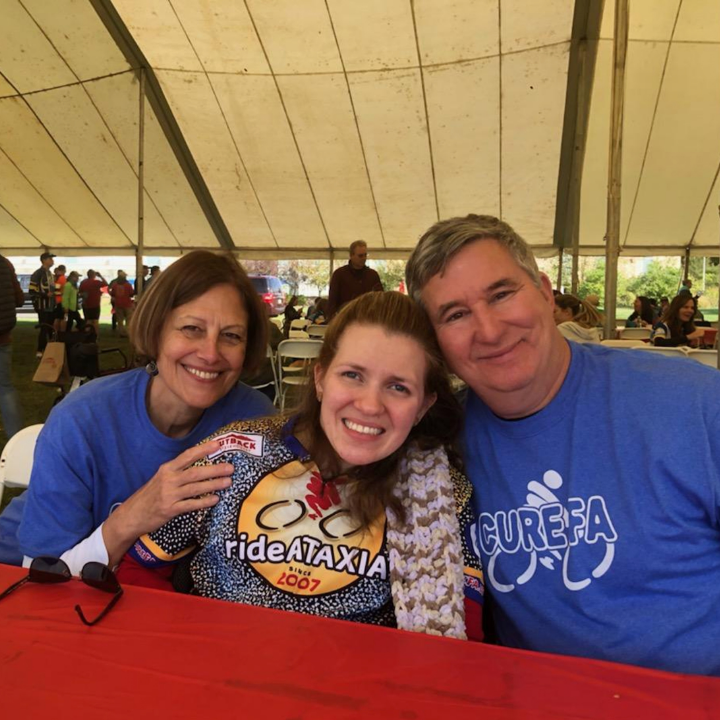
Pictured: rideATAXIA with Family, October 2019
I am very proud of the successful fundraising for FA research that I have completed over the past 25 years to support finding treatments and a cure for FA, and of my advocacy for muscular disease in general. I’m also proud of the way that I treat others with compassion, empathy and respect. My friends and family have been of tremendous support in my life. They have helped me to do things like raise money for FARA, supported me both physically and emotionally, and especially treated me like everyone else. Living with FA has presented me with many challenges. However, that is part of the human experience, and I have tried my best to keep a positive attitude while living with FA.
By Laura Beth