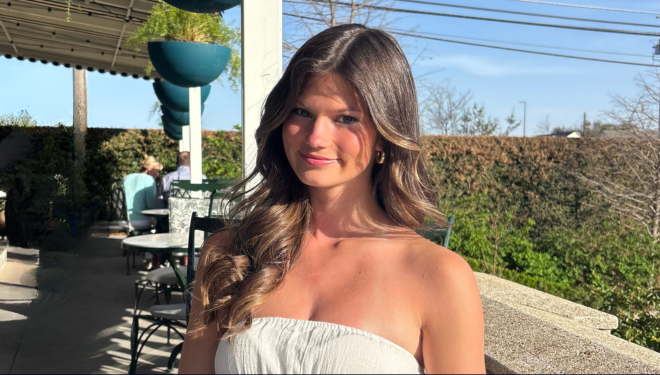
Name: Kiersten Riggs
Age: 24
Where do you call home? Tulsa, Oklahoma
What is your education/career? I have a Marketing degree from Oklahoma State University. I do social media marketing for a company called Bionews, they’re the parent company of Friedreich’s Ataxia News. So I raise awareness for FA through social media and provide news, research, and treatment updates to the community.
Who do you live with? Currently, my parents, but I’m actually going to look at a house today for my best friend and me to live in together.
What’s a typical day for you? I work remotely at home. I always bring my computer outside and enjoy the nice weather. After work, I like to hang out with my friends or family and watch a good Netflix show. I try to plan fun things a few nights a week that I look forward to, and I also attend a church group one night a week. But due to fatigue, I need 2 to 3 evenings where I’m doing nothing.
How long have you known you are living with FA? When and how were you diagnosed? I was diagnosed when I was 16 due to my older sister‘s diagnosis. She was 18. I did not have any symptoms yet, but I didn’t have any reflexes in my legs, so that’s why my parents tested me. I started showing symptoms around 19 or 20.
Are there any others with FA in your family? My older sister Lauren has FA. She is 26.
Describe an adaptation and/or transition you have had to take due to living with FA: When I go do things that involve a lot of walking, I will bring a walker or a walker/wheelchair so I can be pushed around. It makes life a lot easier, having a mobility aid and not being tired and looking for a seat and they’re not being one. Plus I don’t fall anymore having a walker because that’s happened once or twice.
What do you like to do to stay active, and what type of exercises work for you to stay strong? I just try to do a bunch of things like run errands where I’m naturally walking around a bunch. I also go on the treadmill in my house. I am also starting physical therapy this week.
Do you have any hobbies or special interests? I love playing card games, I love fishing, I love going to the lake, I love to watch Netflix shows, I love to drive around and jam out to country music, and I recently got into reading.
What is a good trick to make daily life easier? Having cups with lids, so I do not spill my drinks; transferring them from the kitchen to a table; using my walker as a method of transportation; I will put my laundry basket on my walker and push it into my room. I also get nauseous from my medicine and supplements, so I started getting little bags of Goldfish crackers, and when I’m nauseous, I eat one, and it has been a game changer having snacks on me.
When FA gets you down, what do you think/do to feel better? I cry. It is better to let your emotions out than keep them inside. When I cry, I’m good within an hour. If I keep it in, I will be sad for a week. Driving around and listening to music is my biggest coping mechanism. My second is talking it out with other people. I make sure to do a combination of both. A support system is huge.
What is one way living with FA has POSITIVELY affected your life? Having a whole new community of FA’ers as friends. My FA friends are my biggest support system.
What is the first thing you want to do when a cure/treatment for FA is found? Dance. I miss being able to jump, spin, and move without stumbling and catching myself on furniture.
“I have FA, but FA doesn’t have me.” What does this statement mean to you? I am still living my life to the fullest. I am so happy, and I just happen to have FA, but it does not control my life. Every human has their struggles; FA is just mine, but our struggles do not define us.
How do you live your life in the face of adversity? I surround myself with positive people, plan activities that are fun, and do my hobbies so I do not have time to dwell on the negative.
Interview by
Christina Cordaro
Edited by
Brittany Sommerfield